The Hidden Cost of Equipment That Slows Down Your Service Route
Summary: For pest management professionals, small equipment inefficiencies can add up to significant time and expense. From durability and maintenance to ease of use, the tools technicians rely on every day can directly affect productivity and profitability. Learn why evaluating the long-term value of pest control equipment matters just as much as its purchase price.

Pest management professionals (PMPs) operate in an industry where time, reliability and customer satisfaction directly affect profitability. Between scheduled service visits, unexpected callbacks, documentation and travel time, technicians have a lot to manage throughout the day.
While labor, fuel and vehicle expenses often receive the most attention, equipment performance can also have a meaningful impact on operating costs.
Small Inefficiencies Can Add Up
Consider a technician servicing multiple commercial properties throughout the day. Each location may require inspecting, resetting, cleaning or replacing several traps.
If a trap is difficult to set, requires additional handling or needs frequent replacement, those extra minutes can accumulate across an entire service route. Over weeks and months, the inefficiencies can translate into additional labor costs and reduced productivity. For PMPs, the goal isn't necessarily to work faster. It's to eliminate unnecessary steps without compromising service quality.
The Purchase Price Doesn't Tell the Whole Story
When evaluating pest control equipment, it's easy to focus on the initial purchase price. However, a lower-cost product doesn't always translate into lower operating costs.
Professionals should also consider:
- Durability: How well does the equipment withstand repeated use and routine servicing?
- Ease of operation: Can technicians set, inspect, and reset traps efficiently?
- Cleaning and maintenance: Does the design allow for straightforward cleaning between uses?
- Replacement frequency: How often does equipment need to be repaired or replaced?
- Consistency: Can technicians depend on the equipment to function properly when maintained and used as directed?
Together, these factors help determine the total cost of ownership and whether equipment delivers lasting value.
Standardizing Equipment Across Service Routes
When technicians regularly work with the same types of traps, they become familiar with their operation, maintenance requirements and proper handling procedures. Standardization can also simplify training, inventory management and purchasing decisions. Instead of stocking numerous variations of similar equipment, pest management companies can focus on a smaller selection of products that meet their service requirements.
Of course, no single trap is appropriate for every situation. Equipment selection should always reflect the target pest, environment and service objectives.
Reliable Equipment Supports Better Customer Service
Equipment efficiency also extends beyond labor savings. When technicians spend less time addressing equipment-related issues, they can devote more attention to inspecting properties, identifying changing pest conditions and communicating with customers.
This is particularly important for commercial accounts where service expectations may include detailed documentation, sanitation recommendations and ongoing communication with facility managers.
Making Equipment Decisions That Pay Off
For PMPs evaluating their equipment, durable construction, straightforward operation and ease of cleaning are practical features worth prioritizing, especially for traps used repeatedly across multiple accounts.
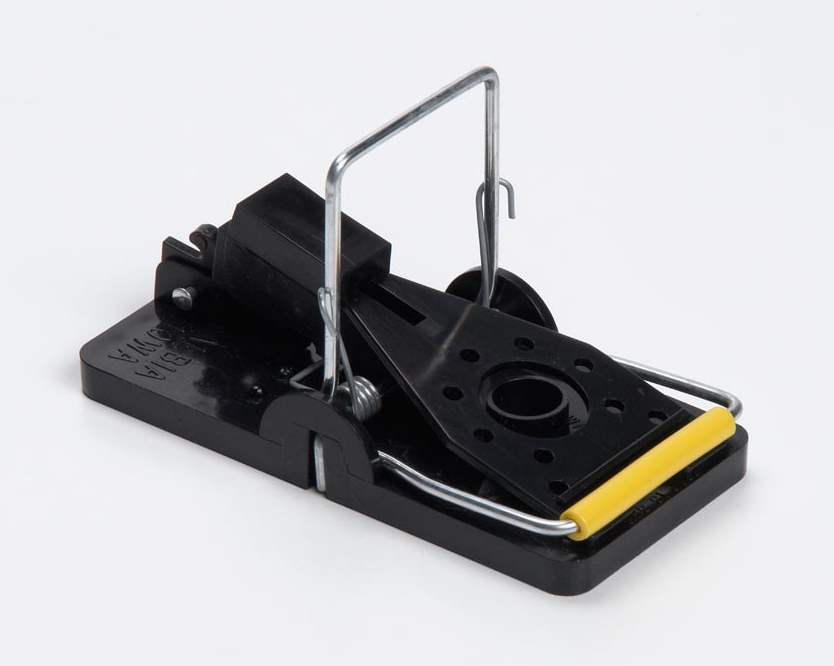
For example, the Kness Snap-E® Mousetrap incorporates durable ABS plastic and steel construction, a pre-formed bait cup and a design that allows technicians to release captured rodents without direct handling. And adding a cover provides an additional layer of protection.
Ultimately, choosing equipment that performs consistently and supports technicians in the field is one way PMPs can protect both service quality and their profitability.