
You’ve seen the signs. Maybe it’s droppings in the pantry, scratching behind a wall or even a mouse darting across the floor. You set a trap where you think it will do the job, and then nothing happens.
Before assuming the trap isn’t working, take a closer look at your strategy. Successful mouse control isn’t just about having a good trap. It’s about understanding where mice are active, placing traps accordingly and using what you learn to make better decisions.
Put Traps Where Mice Actually Travel
Mice generally prefer to move along walls, edges and other protected areas rather than crossing wide-open spaces. A trap placed in the middle of a room may never intersect with the mouse’s regular route.
Look for areas that naturally provide cover or connect food, water and nesting locations. Behind appliances, along baseboards, inside cabinets and near suspected entry points can all be worth investigating.
The goal isn’t to put a trap where you see the mouse. It’s to put the trap where the mouse is likely to go.
Let the Signs Guide You
You don’t necessarily have to see a mouse to figure out where it has been. Droppings, gnaw marks, shredded nesting material, food damage and other signs can help identify areas of activity. Pay attention to where those signs are concentrated and use them to guide trap placement.
This is where trapping becomes more than simply catching a mouse. A strategically placed trap can also become a valuable monitoring tool.
One Trap May Not Tell the Whole Story
Setting one trap and waiting can leave you with very little information. Using multiple traps in strategic locations can provide a clearer picture of where mice are traveling and where activity is concentrated. If one location consistently shows activity while another doesn’t, you’ve learned something that can help guide your next move.
This approach is especially important for pest management professionals (PMPs), who need to understand the scope and location of rodent activity rather than simply respond to an individual sighting.
No Catch Doesn’t Necessarily Mean No Mice
If you’re still finding fresh signs of mouse activity but your trap remains empty, don’t automatically assume the mice are gone. Instead, reconsider the placement.
Are there signs of activity somewhere else? Could the mice be entering from another location? Is the trap positioned along a likely travel route?
Sometimes moving a trap a relatively short distance can put it in a much better position. Other situations may call for additional traps or monitoring points. An empty trap can still tell you something, but only if you’re paying attention.
Think Beyond the Trap
Catching a mouse addresses the immediate problem. Understanding why mice are there can help address the bigger one. Inspect the surrounding area for possible entry points, accessible food and water, clutter or other conditions that could be attracting or supporting rodents. Gaps around pipes, doors, utility penetrations and other openings can provide opportunities for mice to enter a structure.
Without addressing these conditions, catching one mouse may simply make room for the next.
Choose the Right Tool for the Situation
Different environments can call for different trapping approaches.
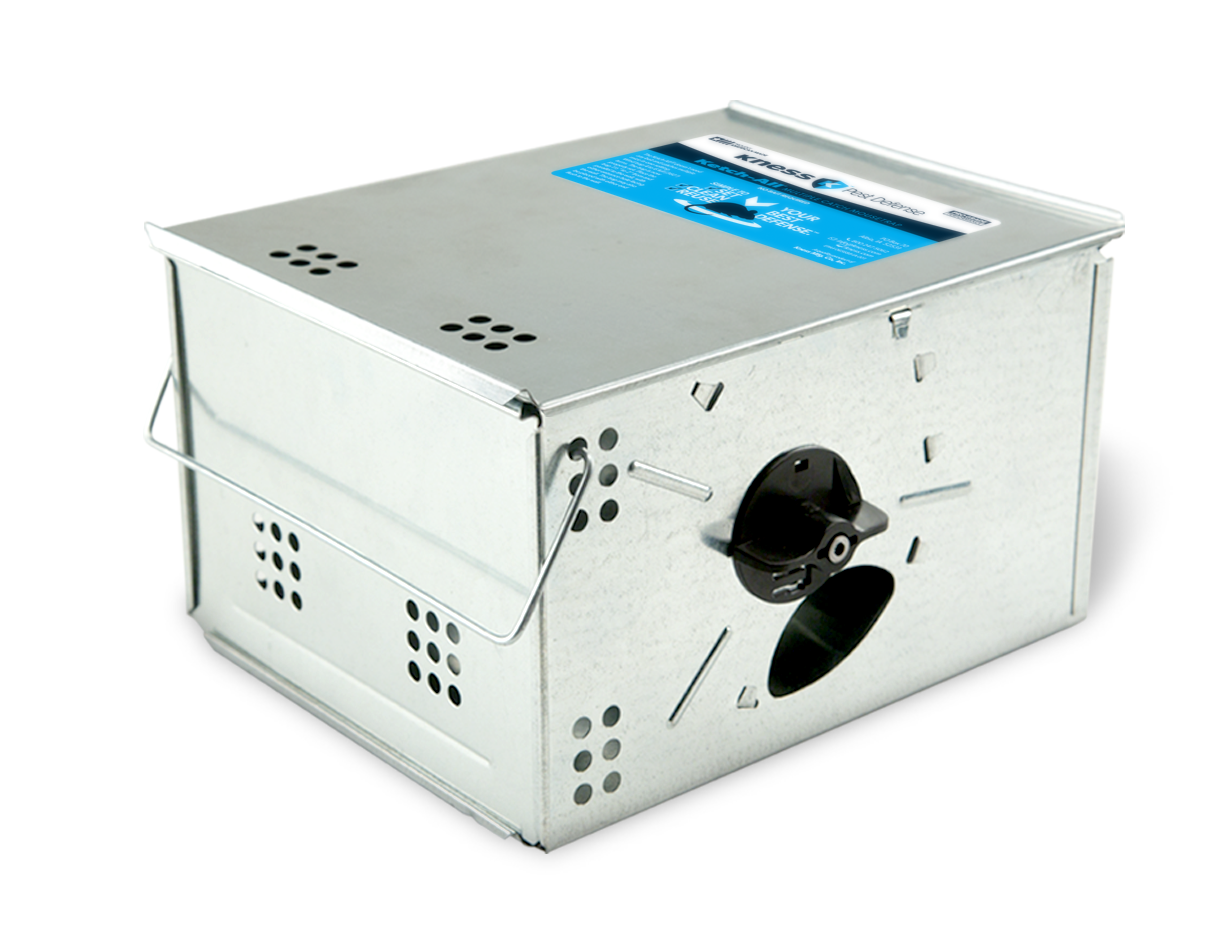
Kness Snap-E® Mouse Traps offer quick, easy setting and can be strategically positioned where individual mouse activity has been identified. Ketch-All® Multiple Catch Mousetraps provide another option for areas where ongoing monitoring or multiple catches may be appropriate, without the use of bait or poison. Kness also offers protective cover options that can help create more discreet, protected trap placements in environments where it’s needed.
The important part isn’t simply putting out more traps. It’s choosing the right tool, putting it in the right place and continuing to evaluate what the results are telling you.
When It’s Time to Call a Professional
Sometimes mouse activity is more extensive than it initially appears. If signs continue despite your best efforts, mice are accessing difficult-to-reach areas or you’re unsure where they’re entering, consider contacting a pest management professional.
PMPs are trained to look at the entire environment, identifying activity, entry points and conditions that may be contributing to the problem, and developing a control strategy based on what they find.
The Pro’s Edge Is Knowing What to Do Next
Effective mouse control isn’t about setting a trap and hoping for the best. It’s about reading the signs, identifying the right locations and adjusting your approach based on what you learn Because the edge isn’t simply owning a better trap. It’s knowing how to use the information the trap gives you.
That’s The Pro’s Edge.